Police, like all public safety personnel (PSP), are exposed to stressful and potentially psychologically traumatic events. As a result, research evidence indicates a high prevalence of mental health issues and suicidal behaviour in PSP.
52%reported moderate to severe stress
88%reported moderate to severe anxiety
87%reported moderate to severe depression
29%were in the clinical diagnostic range for PTSD
Police are more likely to engage in suicidal behaviours than the general public.
Source: CAMH, Police Mental Health: A Discussion Paper (October 2018).
Canadian SKY Resilience Program
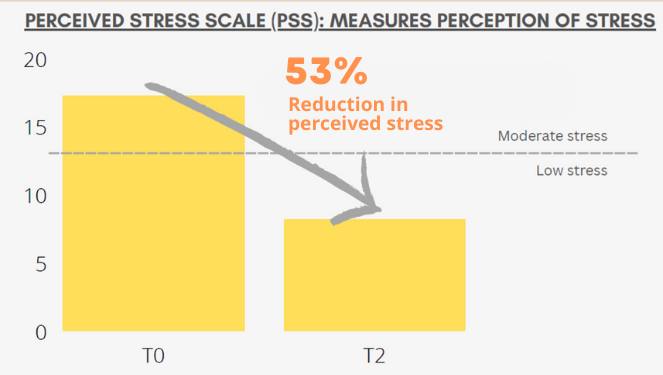
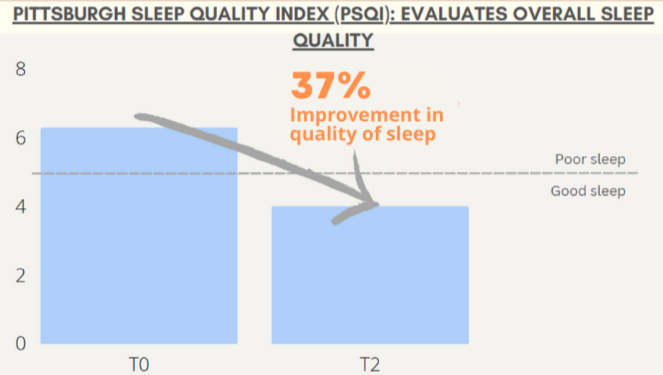
SKY Resilience has been taught at the Vancouver Police Department (VPD) and the London Police Association. A selection of the VPD program metrics is shared below.
53% reduction in perceived stress. Perceived Stress Scale (PSS), before the program (T0) and after it (T2).37% improvement in quality of sleep. Pittsburgh Sleep Quality Index (PSQI), before the program (T0) and after it (T2).
Bahia Military Police, Brazil
Preliminary research results from the SKY Resilience Program with over 3,000 officers from the Bahia Military Police in Brazil:
Organizational impact
60%Reduction in use of force
70%Decrease in community complaints
Individual impact
Improvement in relationships between peers
Stronger relationship with the community
Increased commitment to the organization
Improved productivity
Discover the power of SKY
From reducing stress to getting better rest, these techniques have a demonstrated, measurable impact on quality of life. Over 100 independent studies conducted on four continents and published in peer-reviewed journals have demonstrated a comprehensive range of benefits from practicing SKY Breath Meditation.
33%
Immune cell count
Increase in lymphocytes in 6 weeks, which remained in the normal range
56.6%
Stress hormone
Reduction in serum cortisol in 2 weeks
21%
Life satisfaction
Increase within 1 week
Latest Research
Yale University Study
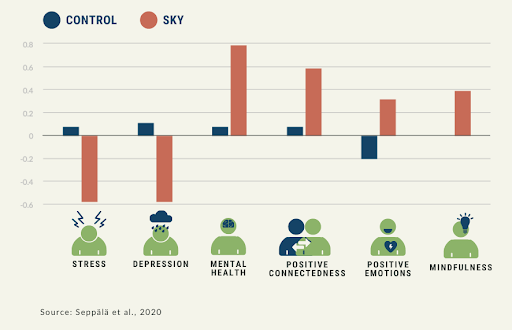
A 2020 randomized controlled study run by Yale University scientists evaluated the effect of SKY and two other programs, Mindfulness-Based Stress Reduction and Emotional Intelligence, on well-being as compared to a control group. SKY had the highest results of all the programs, benefiting stress, depression, mental health, mindfulness, positive emotion and social connectedness. (Seppälä et al., 2020)
SKY compared with a control group. Source: Seppälä et al., 2020.
Harvard University Study
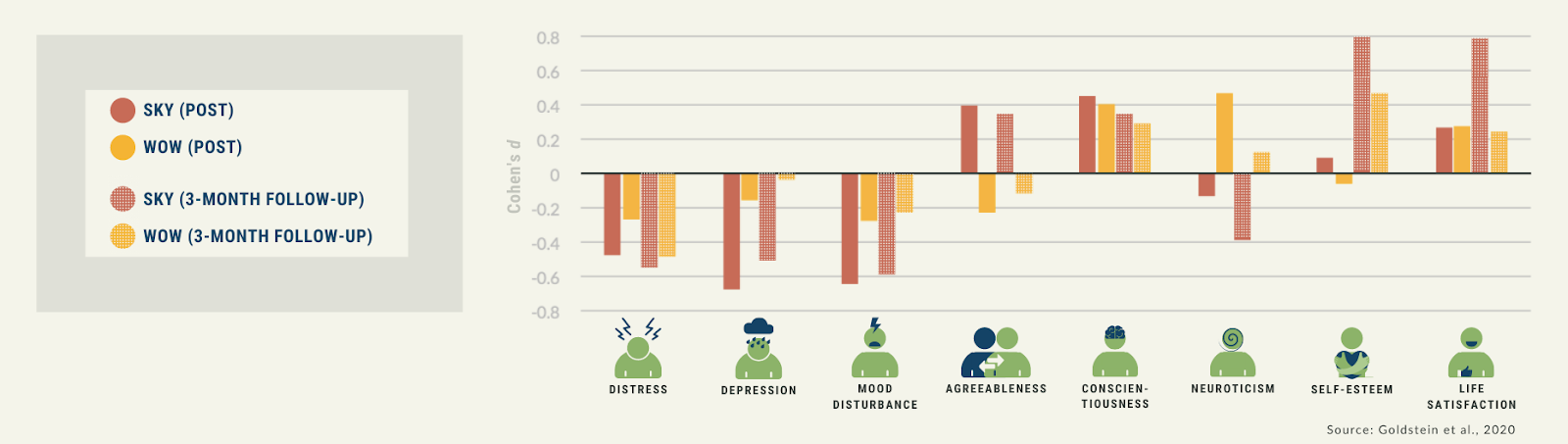
A 2020 randomized controlled study run by Harvard University scientists evaluated the effect of SKY versus a cognitive behavioral intervention. SKY demonstrated greater improvements than the cognitive behavioral intervention in perceived stress, sleep, social connectedness, distress, anxiety, depression, conscientiousness, self-esteem, and life satisfaction. SKY also led to improved sleep and stress reactivity. Results were observed immediately after and 3 months after the workshop, suggesting long-term benefit. (Goldstein et al., 2020)
SKY compared with a cognitive behavioral intervention, after the workshop and at 3 months. Source: Goldstein et al., 2020.
In other studies, SKY Breath Meditation led to increased psychological resilience (Goldstein et al., 2016; Kjellgren et al., 2007), decreased stress (Subramanian et al., 2012) and reduced impulsive behavior (Ghahremani et al., 2013). SKY has been shown to improve emotion regulation (Gootjes et al., 2011), decrease stress (Agte et al., 2008; Chandra et al., 2017; Kumar et al., 2013), anxiety and depression (Doria et al., 2015; Hamilton-West et al., 2019; Janakiramaiah et al., 2000; Katzman et al., 2012; Sharma et al., 2017; Toschi-Dias et al., 2017; Vedamurthachar et al., 2006), and reduce PTSD (Descilo et al., 2009; Seppälä et al., 2014).
Physical and Mental Health Benefits
Sudarshan Kriya and accompanying breathing practices, referred to collectively as SKY and taught through the Art of Living Foundation worldwide, have been found to enhance brain, hormone, immune and cardiovascular system function. Published research shows that SKY significantly reduces stress, depression, anxiety and Post-Traumatic Stress Disorder (PTSD), and significantly increases well-being both mentally and physically. Research also demonstrates that the effects of SKY reach all the way down to the molecular level, to our DNA.
Over 100 independent studies conducted on four continents and published in peer-reviewed journals have demonstrated a comprehensive range of benefits from SKY practice. Numbers in brackets refer to the references below.
Mental well-being
1. Restoration and enhancement of vibrant mental health
Significant reductions in anxiety are found in many populations, including a 73% response rate and 41% remission rate in individuals for whom medication and psychotherapy treatments had failed [1].
Multiple studies demonstrate that depressed patients who learned SKY experienced a 68–73% remission rate within one month.
Significant reductions in PTSD symptoms were found in 4–6 weeks and were sustained at 6 months [15] and one year, with no follow-up after 1 month [3, 15].
Reduces impulsivity and addictive behaviors [24, 25].
Improved emotional regulation [1, 17, 18, 26–28].
Increased levels of self-esteem, optimism, joviality (e.g. joy, happiness, energy), serenity, life satisfaction and quality of life [4, 5, 15, 18, 28–30].
2. Enhanced brain functioning [13, 14, 22, 31]
Increased mental focus and heightened awareness [31].
Faster recovery from stressful stimuli [22].
3. Improved quality of sleep [32]
Restoration of time spent in deep, restful stages (stages III and IV) of sleep.
For example, blood lactate levels in police cadets who did not learn SKY were 4 times higher than in their classmates who were randomized to learn SKY, suggesting a greatly increased resilience to stress in SKY practitioners.
Since stressful physiological responses negatively impact the immune, cardiovascular and endocrine systems, as well as mental health, this has significant implications for wellness [16].
Increased biomarkers of well-being [38]: significant increases (33%) in the well-being hormone prolactin in depressed patients with low prolactin levels, from the very first session.
Increased levels of antioxidant enzymes (glutathione, catalase, and superoxide dismutase) [6, 35, 39]. Antioxidants protect us from many diseases and rapid aging.
2. Enhanced immune function
Improved immune cell counts in apparently healthy individuals [21, 25], some documented within three weeks (neutrophils, lymphocytes, platelet count) [21]. Improved immune cell counts in health-compromised individuals were seen in 12 weeks (Natural Killer cells) [25].
Rapid changes to gene expression [39–41]. SKY induced changes in the expression of genes in white blood cells (our immune cells) within two hours of starting the practice. This was 4-fold more than simple exercise and relaxation used as the control condition in the same study participants [40].
Long-term effects of SKY on the expression of 11 genes related to oxidative stress, DNA damage, cell cycle control, and cell death suggest that the long-term benefits of SKY may be mediated in part by regulation of gene expression [39].
3. Enhanced cardiovascular and respiratory function
Reduced heart rate in both healthy and health-compromised individuals [6, 42–44].
Reduced blood pressure in both healthy and health-compromised individuals [6, 37, 42, 43].
Improved cholesterol and triglyceride (lipid) profiles [6, 21, 36], sometimes seen as early as 3 weeks, with no change in diet [36].
Improved respiratory function [3, 43–46]: respiration rate dropped by 5% in 1 week [3] and 15% in 12 weeks [45], with increased lung (vital and forced vital) capacity [43, 44, 46].
In summary
Sudarshan Kriya uses specific cyclical, rhythmic patterns of breath to bring the mind and body into a relaxed, yet energized state. Its effects have been studied in open and randomized trials, both in healthy and health-compromised populations.
Research suggests that SKY reduces depression, anxiety, PTSD and stress. It has also been shown to curb addictive behaviors and substance abuse. It significantly increases feelings of well-being, optimism and mental focus and improves emotion regulation. In addition, SKY is associated with enhanced cardio-respiratory function, antioxidant status and immune system function. The practice has even been shown to impact gene expression in the short and long term, suggesting that the effects of SKY span all levels of the physiology, from the DNA within our cells to organ systems. Viewed together, the wide range of documented benefits suggests that SKY may be an efficient tool for rapidly strengthening the mind-body complex.
SKY and Depression
More than a dozen published studies have documented significant relief from depression in individuals who learned and practiced Sudarshan Kriya and accompanying breathing techniques (SKY). These studies have demonstrated a 67–73% success rate in relief from depression, regardless of the severity of depression.
These results are experienced rapidly, often within 3–4 weeks. And unlike conventional treatments, there is uniform rapid relief from depression with SKY practice, regardless of how long a person has been suffering from clinical depression or the degree to which brain “dysfunction” (e.g. abnormal EEG patterns or hormone levels) is found in the depressed individual.
Further, SKY has been found to significantly stem “the blues,” the non-clinical melancholy that many people commonly experience.
Highlights of research findings
Remission from depression is experienced rapidly
Substantial relief was experienced in three weeks.
By one month, individuals were considered to be in remission.
At three months, the individuals remained asymptomatic and stable, which demonstrates that results persisted and cannot be considered a placebo effect. (Placebo effects in depression wane after 4 weeks.)
SKY produced highly beneficial biological effects on brain and hormone function
The P300 ERP EEG brainwave pattern and NREM brainwave pattern, which measure electrical brainwave activity and are abnormal in many depressed people, returned to the normal range by ninety days.
Return to healthier hormone levels: plasma prolactin, a well-being hormone believed to be a key factor in producing depression relief, increased significantly after the very first SKY session.
Levels of plasma cortisol (the stress hormone) decreased significantly after three weeks.
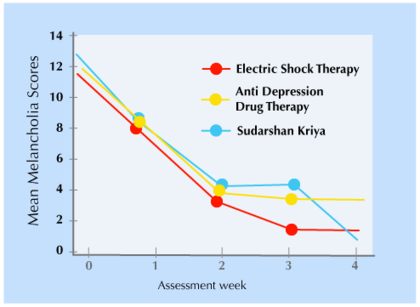
As effective as anti-depressant medication
In a comparison study, SKY was statistically as effective as conventional anti-depressant medication (Janakiramaiah et al., 2000). Yet, in contrast to the usual treatments for depression, SKY is natural and free of unwanted side effects. It is self-administered and self-empowering. It can greatly reduce doctor and hospital caseloads, making SKY cost-effective and staff-effective as well.
Mean melancholia scores over four weeks: electroconvulsive therapy, anti-depressant drug therapy and Sudarshan Kriya. Source: Janakiramaiah et al., 2000.
“Sudarshan Kriya is clinically feasible and effective. It has the potential to become a first-line treatment of dysthymic [chronic, mild depression] patients and possibly in mild and moderate forms of major depressive disorder.”
References
Numbered references for the physical and mental health benefits above. For the full library of published studies, see aolresearch.org.
Show all references
Katzman, M.A., et al., A multicomponent yoga-based, breath intervention program as an adjunctive treatment in patients suffering from Generalized Anxiety Disorder with or without comorbidities. International journal of yoga, 2012. 5(1): p. 57.
Vedamurthachar, A., et al., Antidepressant efficacy and hormonal effects of Sudarshana Kriya Yoga (SKY) in alcohol dependent individuals. Journal of affective disorders, 2006. 94(1): p. 249-253.
Seppälä, E.M., et al., Breathing-Based Meditation Decreases Posttraumatic Stress Disorder Symptoms in US Military Veterans: A Randomized Controlled Longitudinal Study. Journal of traumatic stress, 2014. 27(4): p. 397-405.
Kjellgren, A., et al., Wellness through a comprehensive yogic breathing program – a controlled pilot trial. BMC Complement Altern Med, 2007. 7: p. 43.
Sureka, P., et al., Effect of Sudarshan Kriya on male prisoners with non psychotic psychiatric disorders: A randomized control trial. Asian journal of psychiatry, 2014. 12: p. 43-49.
Agte, V.V. and S.A. Chiplonkar, Sudarshan kriya yoga for Improving Antioxidant status and Reducing Anxiety in Adults. Alternative & Complementary Therapies, 2008. 14(2): p. 96-100.
Narnolia, P.K., et al., Effect of Sudarshan Kriya Yoga on Cardiovascular Parameters and Comorbid Anxiety in Patients of Hypertension.
Doria, S., et al., Anti-anxiety efficacy of Sudarshan Kriya Yoga in general anxiety disorder: a multicomponent, yoga based, breath intervention program for patients suffering from generalized anxiety disorder with or without comorbidities. Journal of affective disorders, 2015. 184: p. 310-317.
Toschi-Dias, E., et al., Sudarshan Kriya Yoga improves cardiac autonomic control in patients with anxiety-depression disorders. Journal of Affective Disorders, 2017. 214: p. 74-80.
Sharma, A., et al., A breathing-based meditation intervention for patients with major depressive disorder following inadequate response to antidepressants: a randomized pilot study. The Journal of clinical psychiatry, 2017. 78(1): p. e59.
Janakiramaiah, N., et al., Antidepressant efficacy of Sudarshan Kriya Yoga (SKY) in melancholia: a randomized comparison with electroconvulsive therapy (ECT) and imipramine. Journal of affective disorders, 2000. 57(1): p. 255-259.
Janakiramaiah, N., Gangadhar, B.N., Naga Venkatesha Murthy, P.J., Harish, M.G., Subbakrishna, D.K., Meti, B.L., Raju, T.R., and A. Vedamurthachar, Therapeutic efficacy of Sudarshan Kriya Yoga (SKY) in dysthymic disorder. NIMHANS J., 1998. 17: p. 21-28.
Naga Venkatesha Murthy, P., et al., Normalization of P300 amplitude following treatment in dysthymia. Biological Psychiatry, 1997. 42(8): p. 740-743.
Murthy, P.N.V., et al., P300 amplitude and antidepressant response to Sudarshan Kriya Yoga (SKY). Journal of affective disorders, 1998. 50(1): p. 45-48.
Descilo, T., et al., Effects of a yoga breath intervention alone and in combination with an exposure therapy for post-traumatic stress disorder and depression in survivors of the 2004 South-East Asia tsunami. Acta Psychiatr Scand, 2010. 121(4): p. 289-300.
Martin, A., Multi-component yoga breath program for Vietnam veteran post traumatic stress disorder: randomized controlled trial. Journal of Traumatic Stress Disorders & Treatment, 2013.
Kharya, C., et al., Effect of controlled breathing exercises on the psychological status and the cardiac autonomic tone: Sudarshan Kriya and Prana-Yoga. Indian Journal of Physiology and Pharmacology, 2014. 58(3): p. 210-220.
Goldstein, M.R., et al., Improvements in well-being and vagal tone following a yogic breathing-based life skills workshop in young adults: Two open-trial pilot studies. International journal of yoga, 2016. 9(1): p. 20.
Carter, J., et al., Multi-component yoga breath program for Vietnam veteran post traumatic stress disorder: randomized controlled trial. J Trauma Stress Disor Treat 2, 2013. 3: p. 2.
Walker III, J. and D. Pacik, Controlled Rhythmic Yogic Breathing as Complementary Treatment for Post-Traumatic Stress Disorder in Military Veterans: A Case Series. Medical acupuncture, 2017. 29(4): p. 232-238.
Subramanian, S., et al., Role of sudarshan kriya and pranayam on lipid profile and blood cell parameters during exam stress: A randomized controlled trial. International journal of yoga, 2012. 5(1): p. 21.
Chandra, S., et al., Mental stress: neurophysiology and its regulation by Sudarshan Kriya Yoga. International journal of yoga, 2017. 10(2): p. 67.
Kharya, C., et al., Effect of controlled breathing exercises on the psychological status and the cardiac autonomic tone: Sudarshan Kriya and Prana-Yoga. Indian J Physiol Pharmacol, 2014. 58(3): p. 210-220.
Ghahremani, D.G., et al., Effects of the Youth Empowerment Seminar on impulsive behavior in adolescents. Journal of Adolescent Health, 2013.
Kochupillai, V., et al., Effect of rhythmic breathing (Sudarshan Kriya and Pranayam) on immune functions and tobacco addiction. Annals of the New York Academy of Sciences, 2005. 1056(1): p. 242-252.
Gootjes, L., I.H. Franken, and J.W. Van Strien, Cognitive Emotion Regulation in Yogic Meditative Practitioners. Journal of Psychophysiology, 2011. 25(2): p. 87-94.
Katzman, M.A., et al., A multicomponent yoga-based, breath intervention program as an adjunctive treatment in patients suffering from generalized anxiety disorder with or without comorbidities. Int J Yoga, 2012. 5(1): p. 57-65.
Newman, R., O. Yim, and D. Shaenfeld, Gender and Ethnicity: Are they associated with Differential Outcomes in a comprehensive Social-Emotional-Learning Program? Under review.
Jyotsna, V.P., et al., Comprehensive yogic breathing program improves quality of life in patients with diabetes. Indian journal of endocrinology and metabolism, 2012. 16(3): p. 423.
Warner, A. and K. Hall, Psychological and Spiritual Well-being of Women with Breast Cancer Participating in the Art of Living Program, in Psychology of Cancer, N.L. Hicks and R.E. Warren, Editors. 2012, Nova Science Publishers, Inc.
Bhatia, M., et al., Electrophysiologic evaluation of Sudarshan Kriya: an EEG, BAER, P300 study. Indian journal of physiology and pharmacology, 2003. 47(2): p. 157-163.
Sulekha, S., et al., Evaluation of sleep architecture in practitioners of Sudarshan Kriya yoga and Vipassana meditation. Sleep and Biological Rhythms, 2006. 4(3): p. 207-214.
Kumar, N., et al., Randomized controlled trial in advance stage breast cancer patients for the effectiveness on stress marker and pain through Sudarshan Kriya and Pranayam. Indian journal of palliative care, 2013. 19(3): p. 180.
Mulla, Z.R. and Vedamuthachar, Impact of a Sudarshan Kriya-based occupational stress management intervention on physiological and psychological outcomes. Management and Labour Studies, 2014. 39(4): p. 381-395.
Sharma, H., et al., Sudarshan Kriya practitioners exhibit better antioxidant status and lower blood lactate levels. Biological Psychology, 2003. 63(3): p. 281-291.
Agte, V.V. and K. Tarwadi, Sudarshan kriya yoga for treating type 2 diabetes: a preliminary study. Alternative & Complementary Therapies, 2004. 10(4): p. 220-222.
Agte, V.V., M.U. Jahagirdar, and K.V. Tarwadi, The effects of Sudarshan Kriya Yoga on some physiological and biochemical parameters in mild hypertensive patients. Indian J Physiol Pharmacol, 2011. 55(2): p. 183-187.
Janakiramaiah, N., et al., Therapeutic efficacy of Sudarshan Kriya Yoga (SKY) in dysthymic disorder. Nimhans Journal, 1998. 16(1): p. 21-28.
Sharma, H., et al., Gene expression profiling in practitioners of Sudarshan Kriya. Journal of psychosomatic research, 2008. 64(2): p. 213-218.
Qu, S., et al., Rapid gene expression changes in peripheral blood lymphocytes upon practice of a comprehensive yoga program. PLoS One, 2013. 8(4): p. e61910.
Ayyildiz, D. and K.Y. Arga, Hypothesis: Are there molecular signatures of yoga practice in peripheral blood mononuclear cells? Omics: a journal of integrative biology, 2017. 21(7): p. 426-428.
Somwanshi S. D., H.S.M., Adgaonkar B. D., Kolpe D. V., Effect of Sudarshankriya Yoga on Cardiorespiratory Parameters. International Journal of Recent Trends in Science And Technology, 2013. 8(1).
Kale, J.S., R.R. Deshpande, and N.T. Katole, The effect of Sudarshan Kriya Yoga (SKY) on cardiovascular and respiratory parameters. Int J Med Sci Public Health, 2016. 5(10): p. 2091-4.
Bodi, S.G., et al., Improvement in lung function with a unique breathing technique: Sudarshan kriya yoga (SKY). Chest, 2008. 134(4): p. 144P.
Somwanshi, S., et al., Effect of Sudarshankriya Yoga on Cardiorespiratory Parameters. Int J Recent Trends in Science and Technology, 2013. 8(1): p. 62-66.
Chavhan, D.B., The Effect Of Sudarshan Kriya and Bhastrika Pranayama on Endurance Capacity in Kho-Kho Players. International Multidisciplinary Research Journal, 2013. 6(1).
Step away, Reset, and Recover
Programs run three days and two nights, with 9 to 12 hours of program time, including lodging, meals and on-site activities. They are offered at no cost to first responders and their families.